








7 Proven Ideas to Identify Rare Gemstones Easily: A Jeweler’s Guide
Discovering a special gem in one’s own collection or at an estate sale provides a kind of exhilaration that not many other hobbies can offer. Almost everyone assumes that seeing anything extraordinary takes the expertise of millions of dollars’ worth of equipment or many years of experience working with jewelers. The fact of the matter is that anyone can learn how to discover rare gemstones through the study of some basic features and natural tendencies.
Every time one examines a piece of jewelry, they see history, chemistry, and physics combined. Over years of handling estate pieces and unverified parcels, a few dependable patterns always stand out. Here are seven practical ideas to help you evaluate stones with confidence.

1. Check for Unique Color Shifts under Different Light Sources
The color change phenomenon is the most interesting one that occurs in minerals. Some rocks exhibit different wavelengths of light absorption and reflection when they are either exposed to the warmth of incandescent lamps or cold daylight.
The typical mineral displaying this trait is alexandrite that changes its color from emerald green to raspberry red. Still, there are some rare specimens that change their colors from violet to teal and grey. When the same stone exhibits completely different colors under natural light conditions than it does at night in a dim restaurant, it indicates that its crystals contain unusual trace elements.
2. Scan a Comprehensive Reference Index
If you plan on acquiring or valuing a stone that you've never seen before, make sure you first refer to the rare gemstones list to compare your stone with its physical characteristics. This way you will keep realistic expectations and discover new types of gemstones.
For example, there are a lot of people who mistake valuable glass or synthetic cubic zirconia for real gemstones just because they have no idea about the rare gemstone species such as taaffeite, painite, and grandidierite.
3. Look for Unusual Pleochroism with a Simple Dichroscope
Light travels through many colored crystals along different axes, splitting into distinct rays that can display different body colors. The pocket dichroscope is an affordable instrument which allows you to observe this feature.
When you spin the instrument while observing the stone through it, you may see two different shades of color next to each other. Strong pleochroism is most evident in stones such as tanzanite and some rare colors of minerals. When a mineral shows three different colors depending on the angle of observation, trichroism, then you definitely have something valuable.
4. Watch for Exceptional Spectral Varieties Like Deep Violets
Whereas conventional ruby red and sapphire blue stones prevail in the marketplace, sometimes nature provides unexpected colors that become fascinating for collectors. It is important to understand how certain chemical elements can react with host rocks when looking for rare purple gemstones.
For instance, natural lavender or violet jadeite and natural violet sapphires acquire this specific color due to traces of magnesium, iron, and chromium. If you come across a purple stone that seems not quite vivid or even uneven, then, most likely, the stone is a natural one.
5. Examine Inclusions as Nature’s Fingerprints
From the inexperienced observer’s point of view, the internal blemishes appear to be blemishes. For the expert gemologist, on the other hand, the inclusion is a precious fingerprint that reveals the story of the stone’s history.
The natural crystals take a long time to grow underground and capture the small amounts of gases, fluids, or minerals such as the rutile needles. In the synthetic crystals, one is likely to notice the presence of bubbles that resemble tiny soap suds. Use a standard jeweler’s loupe with ten-power magnification to inspect the interior landscape. Flaws tell you the stone came from the earth.
6. Test Specific Gravity Without Hurting the Stone
The density of every mineral is unique in comparison with all other types of matter that exist in our world. Although professional laboratories use heavy liquids to determine buoyancy, one can sometimes get an idea about weight just by holding the stone in hand.
Zircon is denser than quartz or any glass imitation and seems quite weighty in relation to its size. So, if you throw a stone lightly in your palm and it feels heavier than expected, then its specific gravity can indicate a more dense mineral species.
7. Observe Sharp Facet Junctions and Polish Quality
There are also distinct characteristics left behind through human craft that indicate the amount of effort invested in cutting the stone. Real high-quality items are always either hand-cut or machine-cut, with the machine being very exact in its cutting process, which is why there is a distinct line where two planes meet each other.
Imitations of such objects will feature a more rounded and softer edge where facets meet because the material wore down while being mass-produced. Also, check out the shine on the table facet. Mineral crystals will always feature a glass-like shine, while synthetic materials and soft treatments may have surface imperfections.
What is the single best tool for a beginner to identify unique stones?
The key tool to own is the ten-power jeweler’s loupe. It is what allows you to analyze the surface polish, natural inclusions inside, and facet junctions without having costly laboratory equipment.
Conclusion
Identifying unique gems doesn't need a degree in geology. Training yourself to ignore visual appeal and concentrate on optical effects, inclusions and weight will make it possible for you to distinguish between common fakes and authentic nature gems. Don't hurry, take your time and enjoy history that is contained within each unique crystal.
Tags:
Previous
Find the Ideal Drop Necklace to Match Your Style at Hannoush Cape Cod
Next
How to Clean Silver Jewelry at Home: A Professional Jeweler’s Guide
Related articles


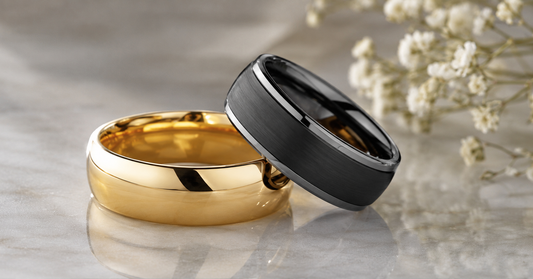
Are Tungsten Wedding Bands Better Than Gold?
Jul 28 2026